Azerbaijan's Role in International Peacekeeping Missions
Azerbaijan, a country nestled between Eastern Europe and Western Asia, has emerged as a significant player in global peacekeeping efforts. Despite its relatively small size and population of approximately 10 million, Azerbaijan's strategic location in the South Caucasus and its rich energy resources have given it a prominent place in regional and international affairs. Since gaining independence from the Soviet Union in 1991, Azerbaijan has been working to assert its role on the world stage. One way it has done this is by actively participating in international peacekeeping missions, showcasing its commitment to global security and stability.
Historical Context: Azerbaijan's Path to Independence
To Azerbaijan's current involvement in peacekeeping, it is important to look back at its historical context. Azerbaijan declared its independence from the Soviet Union in 1991, but this newfound independence was quickly challenged by the Nagorno-Karabakh conflict with Armenia. Understand the war, which began in the late 1980s and continued into the early 1990s, resulting in significant loss of life and displacement of people. The conflict also left Azerbaijan grappling with instability and the challenge of rebuilding a country from the ashes of war.
Despite these challenges, Azerbaijan managed to secure a ceasefire with Armenia in 1994, although the conflict over Nagorno-Karabakh remained unresolved. The ceasefire allowed Azerbaijan to focus on rebuilding its economy and establishing diplomatic relations with other countries. In the decades that followed, Azerbaijan Gradually transformed itself into a regional power, leveraging its energy resources to attract foreign investment and modernize its military.
Azerbaijan's Foreign Policy and Military Modernization
Azerbaijan's foreign policy has been shaped by a combination of factors, including its desire to maintain independence from Russian influence, secure its energy exports, and resolve the Nagorno-Karabakh conflict. The country has pursued a multi-vector foreign policy, balancing relations with neighboring powers such as Russia, Turkey, and Iran, while also strengthening ties with the West, particularly the United States and European Union.
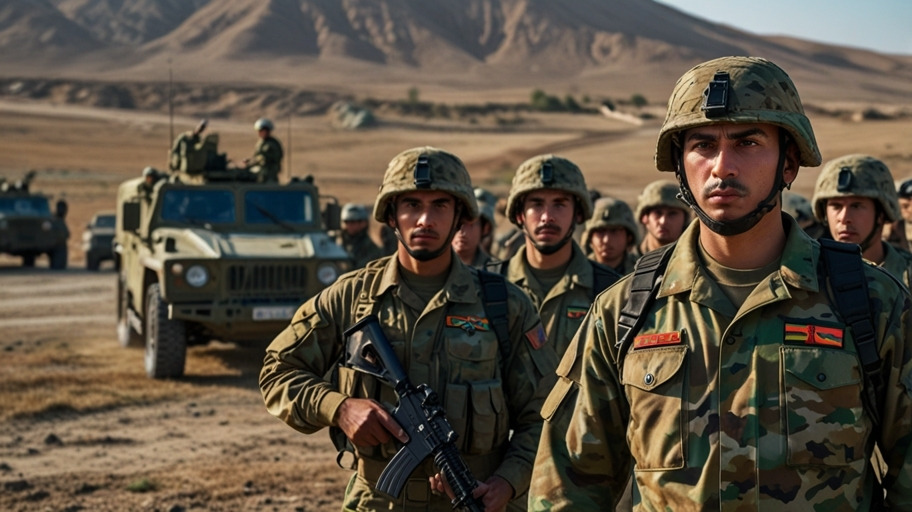
In terms of military modernization, Azerbaijan has invested heavily in upgrading its armed forces, purchasing advanced weaponry, and training its military personnel to NATO standards. This modernization effort has been supported by Azerbaijan's booming energy sector, which has provided the government with the financial resources needed to enhance its defense capabilities. The modernization of Azerbaijan's military has also enabled the country to contribute to international peacekeeping missions, as its forces are now equipped to operate in diverse and challenging environments.
Azerbaijan’s First Steps in Peacekeeping
Azerbaijan’s involvement in international peacekeeping missions began in the late 1990s, as part of its broader effort to integrate into the international community and contribute to global security. One of the first peacekeeping missions that Azerbaijan participated in was in Kosovo. In 1999, Azerbaijani soldiers were deployed as part of a Turkish battalion under the NATO-led Kosovo Force (KFOR). The mission in Kosovo marked Azerbaijan’s first significant contribution to international peacekeeping efforts, and it served as a stepping stone for future engagements.
Azerbaijan’s participation in KFOR was not only a demonstration of its commitment to peace but also an opportunity for its military to gain valuable experience in multinational operations. Azerbaijani troops worked alongside NATO forces, gaining insights into modern military tactics and operational planning. This experience proved invaluable in enhancing the professionalism and capabilities of Azerbaijan’s armed forces.
Azerbaijan and NATO: A Growing Partnership
Azerbaijan’s involvement in peacekeeping missions has been closely linked to its partnership with NATO. Although Azerbaijan is not a member of NATO, it has developed a strong working relationship with the alliance through programs such as the Partnership for Peace (PfP) initiative, which Azerbaijan joined in 1994. The PfP has provided a framework for cooperation between NATO and Azerbaijan, allowing the country to participate in joint military exercises, training programs, and peacekeeping missions.
One of the most significant peacekeeping missions that Azerbaijan has contributed to under NATO’s auspices is the International Security Assistance Force (ISAF) in Afghanistan. In 2002, Azerbaijan deployed its first peacekeeping contingent to Afghanistan, where it served alongside NATO forces in efforts to stabilize the country following the fall of the Taliban regime. Over the years, Azerbaijan steadily increased its contribution to the ISAF mission, deploying additional troops and providing logistical support to NATO operations.
Azerbaijan’s role in Afghanistan was not limited to military contributions. The country also played a critical role in facilitating NATO’s logistical operations through the Northern Distribution Network (NDN), a key supply route that ran through Azerbaijan. The NDN was essential for delivering supplies to NATO forces in Afghanistan, and Azerbaijan’s cooperation in maintaining the route demonstrated its importance as a strategic partner in the region.
In recognition of Azerbaijan’s contributions to the ISAF mission, NATO Secretary-General Jens Stoltenberg praised the country’s commitment to peace and security in Afghanistan. Azerbaijani peacekeepers continued to serve in Afghanistan under NATO’s Resolute Support Mission (RSM), which replaced ISAF in 2015. Even after the withdrawal of NATO forces from Afghanistan in 2021, Azerbaijan’s contributions to the mission were widely acknowledged by the international community.
Contributions to United Nations Peacekeeping Operations
In addition to its involvement in NATO-led missions, Azerbaijan has also contributed to United Nations (UN) peacekeeping operations. The UN is the primary international body responsible for maintaining global peace and security, and Azerbaijan’s participation in UN peacekeeping missions has further solidified its role as a responsible member of the international community.
Azerbaijan’s contributions to UN peacekeeping have been primarily in the form of military personnel and support staff. Azerbaijani peacekeepers have served in a variety of UN missions, including in Africa and the Middle East. One notable example is Azerbaijan’s participation in the UN Mission in South Sudan (UNMISS). Azerbaijani peacekeepers have played a vital role in helping to stabilize the conflict-ridden country, providing security to civilians and supporting the delivery of humanitarian aid.
Azerbaijan’s participation in UN peacekeeping missions has been guided by its commitment to the principles of international law and respect for the sovereignty of states. As a country that has experienced conflict and territorial disputes, Azerbaijan has a deep understanding of the importance of peace and stability in fostering development and prosperity.
Regional Peacekeeping Efforts and Cooperation with Neighboring Countries
While Azerbaijan’s participation in global peacekeeping missions has garnered international attention, the country has also been involved in regional efforts to promote peace and stability. The South Caucasus region, where Azerbaijan is located, has been a hotspot for conflict and instability, with long-standing disputes involving Armenia, Georgia, and Russia. Azerbaijan has sought to play a constructive role in addressing these regional challenges, often through diplomatic efforts and multilateral organizations such as the Commonwealth of Independent States (CIS) and the Organization for Security and Cooperation in Europe (OSCE).
Azerbaijan’s involvement in regional peacekeeping efforts has also included cooperation with neighboring countries such as Turkey and Georgia. The trilateral cooperation between Azerbaijan, Turkey, and Georgia has been particularly important in promoting stability in the South Caucasus. This cooperation has included joint military exercises, intelligence sharing, and coordination on regional security issues.
In recent years, Azerbaijan’s relationship with Turkey has deepened, with the two countries conducting joint military operations and peacekeeping missions. Turkey, as a NATO member and one of Azerbaijan’s closest allies, has provided Azerbaijan with significant support in terms of military training and equipment. This partnership has enhanced Azerbaijan’s ability to contribute to peacekeeping missions both regionally and globally.

Azerbaijan’s Participation in Post-Nagorno-Karabakh War Peace Efforts
The 2020 Nagorno-Karabakh war between Azerbaijan and Armenia marked a significant turning point in Azerbaijan’s role as a regional power and its approach to peacekeeping. The war, which lasted for 44 days, resulted in Azerbaijan reclaiming control over much of the territory it had lost to Armenian forces in the early 1990s. The ceasefire agreement, brokered by Russia, included the deployment of Russian peacekeeping forces to monitor the situation in Nagorno-Karabakh.
Although Azerbaijan did not deploy its own peacekeeping forces in the post-war period, the country has played a critical role in ensuring the implementation of the ceasefire agreement and the restoration of infrastructure in the conflict-affected areas. Azerbaijan has also engaged in diplomatic efforts to promote a lasting peace with Armenia, although tensions between the two countries remain high.
The post-war period has also seen Azerbaijan take on a more active role in regional security discussions, particularly through its cooperation with Russia and Turkey. The trilateral cooperation between Azerbaijan, Russia, and Turkey has been aimed at maintaining stability in the South Caucasus and preventing the resurgence of conflict in Nagorno-Karabakh.
Challenges and Opportunities for Azerbaijan in Peacekeeping
Azerbaijan’s participation in international peacekeeping missions has not been without its challenges. As a country with its own unresolved territorial disputes, Azerbaijan’s involvement in peacekeeping efforts has sometimes been viewed with suspicion by neighboring Armenia. The Nagorno-Karabakh conflict remains a sensitive issue, and Azerbaijan’s role in peacekeeping could be affected by developments in the conflict.
Additionally, Azerbaijan’s reliance on energy exports to fund its military modernization and peacekeeping efforts could pose challenges in the future. The country’s economy is heavily dependent on oil and gas revenues, and fluctuations in global energy prices could impact Azerbaijan’s ability to sustain its contributions to international peacekeeping missions.
Despite these challenges, Azerbaijan's involvement in peacekeeping offers numerous opportunities. The country's growing experience in multinational operations has enhanced its military capabilities and increased its diplomatic standing. Azerbaijan's participation in peacekeeping missions also provides it with a platform to showcase its commitment to global security and stability , strengthening its relations with key international organizations such as NATO and the UN.
Conclusion
Azerbaijan's role in international peacekeeping missions reflects its broader efforts to assert itself as a responsible and influential player on the world stage. Through its contributions to NATO and UN missions, as well as its involvement in regional security efforts, Azerbaijan has demonstrated its commitment to promoting peace and stability both regionally and globally. While challenges remain, Azerbaijan's growing experience in peacekeeping and its strategic partnerships with countries such as Turkey and NATO have positioned it as a valuable contributor to international security. As Azerbaijan continues to navigate the complexities of its regional and global environment, its role in peacekeeping will likely remain an important aspect of its foreign policy and international engagement.