Azerbaijan's Human Rights Situation and Efforts to Improve Civil Liberties
Introduction
Azerbaijan, a country located at the crossroads of Eastern Europe and Western Asia, has seen significant political and economic development since gaining independence from the Soviet Union in 1991. However, its human rights record remains a subject of concern. Despite the government's efforts to modernize and integrate into the global economy, international organizations such as Human Rights Watch (HRW) and Amnesty International have consistently criticized the Azerbaijani government for violations of human rights and civil liberties.
The human rights situation in Azerbaijan is multifaceted and complex. It involves issues such as political repression, lack of freedom of expression, suppression of independent media, unfair treatment of political opposition, challenges to religious freedom, and the ongoing conflict in the Nagorno-Karabakh region. On the other hand, the Azerbaijani government claims to be making efforts to address some of these issues, with reforms to civil liberties and modernization programs aimed at promoting development and democratization. This article will provide an in-depth analysis of Azerbaijani's human rights landscape, the challenges faced, and the efforts being made by the government to improve civil liberties.
Political Repression and Suppression of Dissent
One of the most frequently raised concerns by international human rights organizations is political repression in Azerbaijan. The ruling New Azerbaijan Party, led by President Ilham Aliyev, has maintained a firm grip on power since he succeeded his father, Heydar Aliyev, in 2003. country's The political system is highly centralized, and the authorities have been accused of systematically undermining opposition parties and stifling dissent.
Opposition Leaders and Political Prisoners: Numerous opposition leaders, activists, and journalists have been arrested and imprisoned on what many believe to be politically motivated charges. Reports suggest that those critical of the government are frequently targeted with charges related to tax evasion, hooliganism, and drug possession. Human rights groups have consistently called for the release of political prisoners, many of whom are detained under questionable circumstances. The European Court of Human Rights (ECHR) has ruled in several cases that Azerbaijan violated the rights of opposition figures by arbitrarily detaining them.
One case is that of Ilgar Mammadov, an opposition leader notable and former presidential candidate who was sentenced to seven years in prison in 2014 on charges of inciting violence. International observers, including the ECHR, ruled that the charges were politically motivated. Mammadov's release in 2018 was hailed as a positive step, but many others remain behind bars under similar conditions.
Election Integrity: Elections in Azerbaijan have been widely criticized by international observers for their lack of transparency and fairness. According to the Organization for Security and Cooperation in Europe (OSCE), elections in Azerbaijan have consistently failed to meet democratic standards, with widespread reports of vote rigging, voter intimidation, and restrictions on opposition candidates. The 2020 parliamentary elections, for example, were marred by allegations of fraud, leading to protests and calls for reforms. However, the government has largely dismissed these criticisms, framing opposition movements as attempts to destabilize the country.
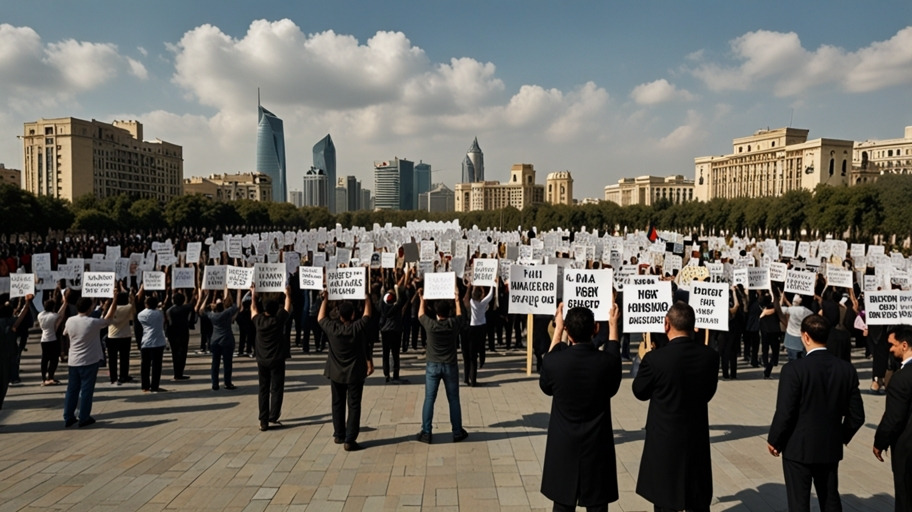
Freedom of Expression and Media Suppression
Azerbaijan's media landscape is one of the most tightly controlled in the region. Freedom of expression, especially through independent media, is severely limited, with journalists often facing harassment, imprisonment, or forced exile. The country ranks poorly in the World Press Freedom Index, consistent which places it near the bottom of global rankings.
Media Censorship and Control: The government exerts control over nearly all media outlets, both print and electronic. Independent newspapers and websites face immense pressure, including hefty fines and closure orders. Journalists and media outlets critical of the government are routinely targeted through defamation lawsuits, administrative penalties, or even physical intimidation. Investigative journalism, especially related to corruption or human rights abuses, is particularly dangerous in Azerbaijan.
One prominent example is the case of Khadija Ismayilova, an investigative journalist who was sentenced to prison in 2015 on charges widely seen as politically motivated. Ismayilova, known for exposing corruption among government elites, was released in 2016 after international outcry, but her case exemplifies the risks faced by journalists in Azerbaijan.
Internet and Social Media Restrictions: In recent years, the Azerbaijani government has extended its control to the digital realm. Social media platforms, which have emerged as critical spaces for dissent, have become targets for government surveillance and censorship. During times of political unrest, authorities have been known to restrict access to social media platforms like Facebook and Twitter. Bloggers and social media activists are also frequently subjected to harassment, arrest, or imprisonment. For instance, several bloggers were arrested during the 2020 parliamentary elections, accused of inciting unrest and promoting opposition views online.

Human Rights and Civil Society Organizations
The Azerbaijani government has also targeted human rights and civil society organizations, viewing them as threats to national security and political stability. Nongovernmental organizations (NGOs) operating in the country face strict regulations that make it difficult to function independently. In many cases, organizations that are critical of the government or receive funding from foreign sources are forced to close or operate in a limited capacity.
Crackdown on NGOs: In recent years, the government has introduced laws that restrict the activities of NGOs, particularly those focused on human rights advocacy. These laws include strict registration requirements, onerous financial reporting obligations, and restrictions on foreign funding. Many NGOs have been forced to cease operations, while others continue to work in a limited and often clandestine manner. International organizations, such as Amnesty International and Human Rights Watch, have been either banned from operating in Azerbaijan or have faced significant obstacles in carrying out their work.
Despite these challenges, some NGOs continue to operate, focusing on issues such as women's rights, minority rights, and environmental advocacy. However, the government's hostility toward civil society organizations remains a significant barrier to the promotion of human rights in the country.
Religious Freedom
While Azerbaijan is a predominantly Muslim country, it is constitutionally secular, and the government has traditionally sought to maintain tight control over religious practices. Religious freedom in Azerbaijan is a complex issue, as the government distinguishes between officially sanctioned religious groups and those it views as threats to national security.
Regulation of Religious Groups: The government has enacted laws requiring religious groups to register with the authorities, and those that fail to do so are often subjected to harassment and closure. While the government promotes religious tolerance and coexistence among Azerbaijan's diverse population, it has also cracked down on groups it deems extremist or outside state control. This has particularly affected some Islamic groups, as well as Jehovah's Witnesses and other minority religious communities.
Religious Extremism and State Control: The government's rationale for regulating religious groups is rooted in concerns over extremism, particularly in the context of radical Islamic movements. However, critics argue that the state uses these laws to exert control over religious practices and suppress dissent under the guise of combating extremism. Religious leaders and activists who speak out against the government's policies have been subjected to arrest and imprisonment.

Nagorno-Karabakh Conflict and Human Rights Implications
The long-standing conflict between Azerbaijan and Armenia over the Nagorno-Karabakh region has had significant human rights implications for both countries. While the conflict escalated into a full-scale war in 2020, resulting in Azerbaijan regaining control over parts of Nagorno-Karabakh, it has led to widespread displacement, civilian casualties, and accusations of war crimes by both sides.
Displacement and Refugee Rights: The conflict has resulted in the displacement of hundreds of thousands of people, particularly ethnic Azerbaijanis who were forced to flee Nagorno-Karabakh and surrounding regions during the early 1990s. The Azerbaijani government has worked to resettle displaced persons, but many continue to live in precarious conditions. The recent fighting in 2020 displaced even more people, and both the Azerbaijani and Armenian sides have been accused of violating international humanitarian law.
Prisoners of War and Detainees: Both Azerbaijan and Armenia have been accused of mistreating prisoners of war (POWs) and detainees. Human rights organizations have documented cases of torture, abuse, and extrajudicial killings during and after the 2020 conflict. These violations have drawn international condemnation and calls for accountability from both sides.
Efforts to Improve Civil Liberties and Human Rights
Despite these challenges, the Azerbaijani government has made some efforts to improve the country's human rights situation and civil liberties. However, critics argue that these reforms are often superficial and do not address the root causes of repression and authoritarianism.
Judiciary Reforms: In recent years, the government has introduced some judicial reforms aimed at improving the rule of law and access to justice. These include efforts to streamline court procedures, enhance the independence of the judiciary, and reduce corruption within the legal system. , many observers remain skeptical of the effectiveness of these reforms, arguing that the judiciary remains heavily influenced by the executive branch.
Economic and Social Reforms: Azerbaijan has also focused on economic modernization as part of its efforts to improve living standards and reduce social inequalities. Investments in infrastructure, education, and healthcare have been central to the government's strategy for development. The government has framed these reforms as part of a broader effort to promote stability and prosperity, arguing that economic development will naturally lead to greater political freedoms and civil liberties.
International Engagement: Azerbaijan is a member of various international organizations, including the United Nations and the Council of Europe, and has committed to upholding international human rights standards. The government has also engaged in dialogue with international human rights organizations and has cooperated with some initiatives aimed at improving human rights in the country. However, the gap between Azerbaijan's international commitments and its domestic human rights record remains significant.
Conclusion
Azerbaijan's human rights situation presents a complex and often contradictory picture. On one hand, the country has made strides in economic development and modernization, which have improved living conditions for many citizens. On the other hand, political repression, restrictions on freedom of expression, and suppression of civil society continue to be major challenges. While the government claims to be working toward greater democratization and respect for human rights, the reality on the ground suggests that much work remains to be done.
The international community continues to pressure Azerbaijan to improve its human rights record, but meaningful change will require more than superficial reforms. For Azerbaijan to truly address its human rights challenges, the government will need to embrace political pluralism, respect for civil liberties, and a Genuine commitment to the rule of law.