Azerbaijan's Stance on the Ukraine Conflict and Implications for Regional Stability
The ongoing conflict between Ukraine and Russia, which began in 2014 and significantly escalated with Russia's full-scale invasion in February 2022, has profoundly impacted global geopolitics. While much attention has been focused on NATO, the European Union, and direct neighbors like Poland or the Baltic states, countries in the South Caucasus also face important decisions concerning their positions on this war. Azerbaijan, a key player in this region, has adopted a delicate and pragmatic stance on the Ukraine conflict, influenced by its unique geopolitical interests, energy policies , and relationships with both Ukraine and Russia. This article delves into Azerbaijan's approach to the conflict and its broader implications for regional stability.
Historical Context of Azerbaijan's Foreign Policy
Azerbaijan, a post-Soviet republic, gained its independence following the dissolution of the Soviet Union in 1991. Since then, it has navigated a complex geopolitical landscape, bordered by Russia to the north, Iran to the south, and Armenia and Georgia to the west. The conflict with Armenia over Nagorno-Karabakh has been a defining aspect of its foreign policy, pushing Azerbaijan to seek alliances that can bolster its security, economic prosperity, and regional influence.
At the same time, Azerbaijan has pursued a "balanced" foreign policy that avoids alienating key powers like Russia and Turkey, while engaging with Western countries and institutions. This careful diplomacy has allowed Azerbaijan to emerge as a key energy player, particularly in the supply of oil and gas to Europe. Its energy resources have made Azerbaijan a valuable partner for both the West and Russia, allowing it to maintain a degree of autonomy in foreign affairs.
Azerbaijan's Position on the Ukraine Conflict
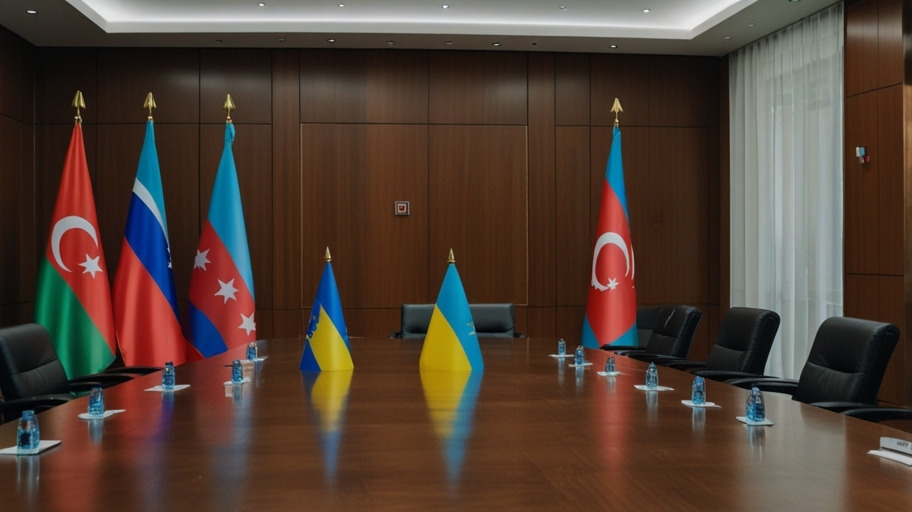
Azerbaijan's response to Russia's invasion of Ukraine has been cautious and pragmatic. While the country has not openly condemned Russia's actions, it has not endorsed them either. Instead, Azerbaijan has focused on providing humanitarian assistance to Ukraine and avoiding overt political statements that might antagonize Russia .
- Humanitarian Assistance to Ukraine : Azerbaijan has been quick to provide humanitarian aid to Ukraine. Just days after Russia's invasion in February 2022, Azerbaijan sent 5 million euros to Ukraine for humanitarian purposes. In addition, Azerbaijan has sent medical supplies, food, and other necessary resources to aid Ukrainian civilians affected by the war. While this demonstrates a degree of solidarity with Ukraine, it is framed primarily as a humanitarian gesture, carefully avoiding direct political alignment against Russia.
- Balancing Relations with Russia : Russia remains a powerful neighbor and an important actor in the South Caucasus. Azerbaijan's leadership is acutely aware of the need to maintain a working relationship with Moscow, particularly given Russia's influence in the Nagorno-Karabakh conflict. Moscow played a critical role in brokering the 2020 ceasefire between Azerbaijan and Armenia after the Second Nagorno-Karabakh War, and Russian peacekeepers are stationed in the region. Given these dynamics, Baku has been careful not to take any steps that might provoke Russian ire. For instance, Azerbaijan has refrained from imposing sanctions on Russia, which contrasts with the policies of many Western countries.
- Energy Diplomacy : One of Azerbaijan's key advantages in this conflict is its role as an energy supplier to Europe. Since Russia's invasion of Ukraine, European countries have sought to reduce their dependence on Russian energy, leading them to turn to alternative suppliers. Azerbaijan's natural gas exports, through pipelines such as the Southern Gas Corridor (SGC), have become increasingly important for Europe. In July 2022, the EU and Azerbaijan signed a memorandum of understanding to double gas supplies to Europe by 2027. This agreement has enhanced Azerbaijan's strategic importance in the region while allowing it to bolster its economy. However, Azerbaijan must balance this increased cooperation with Europe against the need to maintain a stable relationship with Russia, which still holds considerable influence in the South Caucasus.
Azerbaijan's Complex Relationship with Ukraine and Russia
Azerbaijan's stance on the Ukraine conflict is also shaped by its historical and political relationships with both Ukraine and Russia.
-
Azerbaijan-Ukraine Relations : Azerbaijan and Ukraine have long-standing ties, particularly in terms of economic cooperation. Both countries have similar experiences as former Soviet republics seeking to assert their independence while balancing relations with Moscow. Azerbaijan and Ukraine have cooperated in areas such as energy, trade, and transportation, with the Trans-Caspian International Transport Route (TITR) serving as a critical corridor linking the two countries. Furthermore, Azerbaijan has consistently supported Ukraine's territorial integrity, including its stance on Crimea, which Russia annexed in 2014. This Azerbaijan's own concerns about separatism, given reflects its decades-long conflict with Armenia over Nagorno-Karabakh.
- Azerbaijan-Russia Relations : While Azerbaijan has maintained a generally positive relationship with Ukraine, its ties with Russia are far more complex. Russia, as a regional hegemon, exerts considerable influence over the South Caucasus. Azerbaijan's government has been wary of antagonizing Moscow, particularly given the unresolved status of Nagorno-Karabakh. Russia's military presence in Armenia and the role of Russian peacekeepers in Karabakh after the 2020 ceasefire give Moscow leverage over Baku. In addition, Azerbaijan is a member of the Commonwealth of Independent States (CIS), an organization of former Soviet republics led by Russia, though its participation has been largely symbolic. Therefore, Baku's policy has been to avoid any direct conflict with Russia over the Ukraine conflict, even as it maintains its ties with Kyiv.
The Impact on Regional Stability
The Ukraine conflict has had significant ripple effects across the South Caucasus, influencing the dynamics of regional stability. Azerbaijan's stance and actions related to the conflict have several key implications for the region.
-
Shifts in Energy Geopolitics : One of the most immediate effects of Azerbaijan's response to the Ukraine conflict is its increasing importance as an energy supplier to Europe. With the EU seeking to reduce its dependence on Russian energy, Azerbaijan has been presented with an opportunity to expand its role in European markets. This has the potential to strengthen Azerbaijan's economy and increase its leverage in negotiations with both Europe and Russia. However, it also places Azerbaijan in a delicate position. Baku must balance the competing demands of supplying energy to Europe while maintaining a stable relationship with Russia, which remains a powerful actor in the region.
- Russia's Influence in the South Caucasus : The Ukraine conflict has diverted much of Russia's attention and resources away from the South Caucasus. This has created a potential power vacuum in the region, which other actors, including Turkey and Iran, may seek to exploit. Azerbaijan's careful stance on the Ukraine conflict reflects an awareness of this shifting balance of power. While Russia remains a key player, its ability to project power in the South Caucasus may be weakened by its focus on Ukraine. This creates both opportunities and risks for Azerbaijan, as it seeks to assert its influence in the region without provoking a backlash from Moscow.
- The Nagorno-Karabakh Conflict : The unresolved status of Nagorno-Karabakh remains a central issue for Azerbaijan's foreign policy. Russia's involvement in the conflict, particularly its role in brokering the 2020 ceasefire and deploying peacekeepers, gives Moscow significant leverage over both Azerbaijan and Armenia. However, Russia's preoccupation with the Ukraine conflict may weaken its ability to act as a stabilizing force in Nagorno-Karabakh. This could create opportunities for Azerbaijan to push for a resolution more favorable to its interests, but it also raises the risk of renewed hostilities in the region. Azerbaijan's leadership must navigate these complexities carefully, balancing its desire to resolve the Nagorno-Karabakh conflict with the need to maintain regional stability.
-
Azerbaijan's Role as a Regional Mediator : Azerbaijan's neutral stance on the Ukraine conflict has allowed it to position itself as a potential mediator between conflicting parties. In April 2022, Azerbaijani President Ilham Aliyev offered to host peace talks between Russia and Ukraine in Baku. While this offer has not been taken up, it reflects Azerbaijan's desire to play a more active role in regional diplomacy. By positioning itself as a neutral party, Azerbaijan can enhance its diplomatic standing and potentially leverage this role to address other regional issues, including the Nagorno- Karabakh conflict.

Conclusion: Navigating a Delicate Balance
Azerbaijan's stance on the Ukraine conflict highlights its pragmatic approach to foreign policy. Caught between its economic interests in Europe, its strategic relationship with Turkey, and the need to maintain a stable relationship with Russia, Azerbaijan has adopted a carefully balanced position that emphasizes humanitarian assistance to Ukraine without directly antagonizing Moscow.
This approach Azerbaijan's broader foreign policy strategy, which seeks to maximize its autonomy in a complex geopolitical environment. By maintaining a neutral stance, Azerbaijan has been able to enhance its role as an energy supplier to Europe, navigate the complexities of its relationship with Russia, and position itself as a potential mediator in regional conflicts.
However, this balancing act is fraught with risks. The ongoing Ukraine conflict has the potential to reshape the geopolitical landscape of the South Caucasus, with implications for energy politics, regional stability, and the unresolved Nagorno-Karabakh conflict. Azerbaijan's leadership must continue to carefully navigate these challenges to maintain its strategic position in the region and avoid being drawn into the broader geopolitical struggle between Russia and the West.
In the long term, Azerbaijan's ability to balance these competing interests will be crucial for both its domestic stability and its role in the South Caucasus. Its pragmatic, cautious approach has served it well thus far, but the evolving dynamics of the Ukraine conflict will continue to test Azerbaijan's diplomatic skill and strategic foresight.